Master in data science
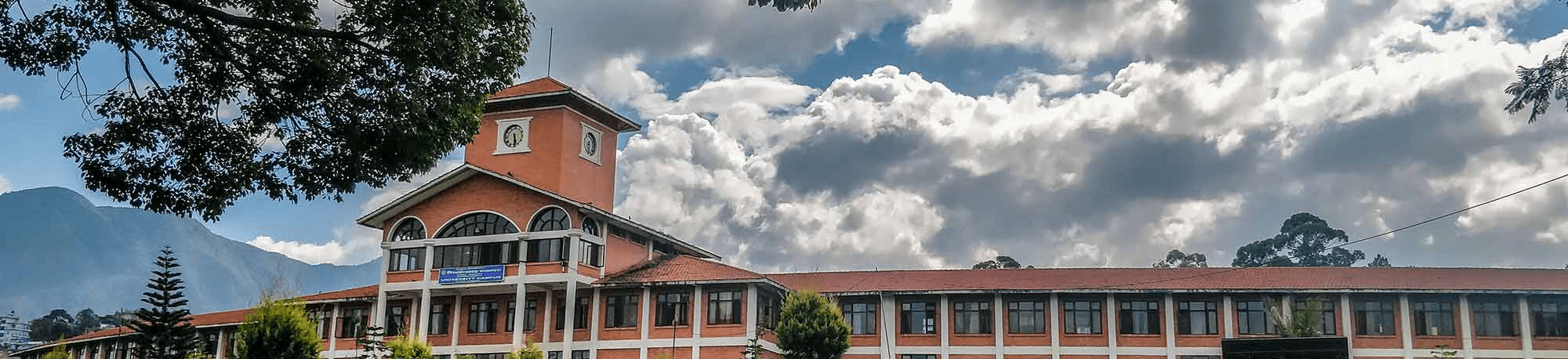
Tribhuvan University
About This Course
A Master in Data Science is an interdisciplinary graduate degree that combines computer science, statistics, and domain expertise to prepare students for analyzing, visualizing, and interpreting complex, large-scale data. In Nepal, this course is designed to produce professionals who can turn messy, raw data into actionable business insights. These programs typically focus on machine learning, data mining, visualization, and advanced analytics to prepare students for careers as data scientists, analysts, or engineers. The Master in Data Science (MDS) program at Tribhuvan University (TU) is offered and implemented by the School of Mathematical Sciences (SMS).
Today, computers are used almost everywhere, and the amount of data available to companies and organizations is growing very quickly. Because of the internet, large amounts of data are easy to access. Many fields such as science, engineering, and industry now focus on creating mathematical models, using computers to study them, and analyzing large sets of data that are collected or generated. All of these tasks are strongly based on mathematics. For this reason, the Master’s Program in Data Science is a perfect fit within the School of Mathematical Sciences at TU. Tribhuvan University (TU) and Kathmandu University (KU) are the pioneers offering specialized programs like the Master in Data Science (MDS).
The Master’s in Data Science is a full-time program completed over 2 years, divided into 4 semesters. It includes core compulsory courses that cover the basics of mathematics, statistics, computer science, and information technology. Along with these, students can choose elective courses from a list that may change each year, following a flexible multi-exit model set by the subject committee. The program carries a total of 60 credits and includes a mix of theory classes, practical work, projects, seminars, internships, and a final thesis to give students both knowledge and hands-on experience.
Duration
0.0
Exam Type
N/A
Level
Graduate Level (Master's Degree)
Why to study Master in Data Science?
Having a Master’s in Data Science in Nepal is a smart move right now because the job market is wide open. Local powerhouses like F1Soft and Deer hold, along with major banks, are constantly searching for data experts, but there just aren't enough qualified people to fill the roles yet. Beyond local jobs, this degree is a ticket to the global market; you can land high-paying remote roles with tech companies in the US or Europe without ever leaving Kathmandu. The best part is the value—you’re getting a world-class curriculum for a fraction of the $40,000 price tag you’d see abroad. Essentially, you're building a high-level skillset in math, coding, and machine learning that sets you up for a massive salary, a potential PhD, or even starting your own tech business.
Why this degree is a game-changer?
- Huge Job Demand: Companies are "hungry" for data pros, but there’s a low supply of talent locally. You'll be in high demand the moment you graduate.
- Work from Anywhere: You can live in Nepal while earning a global salary by working remotely for international tech giants.
- Big Savings: It is much more affordable than studying in the US or Europe, but the lessons and tools you learn are exactly the same.
- High-Level Skills: You’ll walk away knowing the heavy hitters of the data world, like Python, R, SQL, and Machine Learning.
- Future-Proof Career: Whether you want to climb the corporate ladder, get a PhD, or launch a startup, this degree gives you the foundation to do it.
Goals and Objectives of MDS
The goal of this program is to transform you into a data expert who can turn messy information into smart business moves. You will start by mastering the "Big Three"—math, statistics, and computer science—so you understand the actual logic behind the numbers. It’s not just about theory, though; the program focuses on teaching you how to use tools like AI and machine learning to solve real-world problems. You’ll learn how to handle massive amounts of data and, more importantly, how to explain your findings to people who aren’t tech-savvy. By the end, you’ll be able to predict future trends and make ethical decisions regarding data privacy and security. Essentially, it’s about giving you the confidence to lead tech projects and help companies make better, faster decisions.
Course Objectives:
- Build students with advanced mathematical and statistical foundations
- To teach modern data processing and machine learning methods
- To develop skills in data visualization and communication
- Prepare students for leadership roles in tech and research.
Criteria
Eligibility and Admission Criteria
Eligibility and Admission Criteria
Eligibility and Admission Criteria required for Master in Data Science are listed below:
Eligibility
To get into this program, you just need a bachelor’s degree that shows you are comfortable with numbers and basic computing. You need to have completed a bachelor’s degree (at least 15 years of formal education) from a recognized university. The admissions team is specifically looking for students who have a background in calculus, linear algebra, and introductory statistics to ensure you can handle the advanced coursework. This means the door is open for graduates from a wide range of fields, including CSIT, Engineering, BIT, and specialized degrees in Math or Statistics. Even if you come from a general Science, Arts, or BCA background, you are welcome to apply as long as your transcript includes at least two math courses and one statistics course. Ultimately, if you have a solid foundation in quantitative subjects and a drive to work with tech, you’ll fit right in.
Admission Criteria
The entrance exam for the M.Sc. in Data Science is a straightforward, two-hour test designed to see if you’re ready for the program. It consists of 100 multiple-choice questions (MCQs), meaning you’ll just need to pick the correct answer from the options provided. Each question is worth one mark, and the topics are based on the standard B.Sc. syllabus you’ve likely already studied. To pass and be eligible for admission, you need to score at least 35%. It’s a standard "pencil and paper" style test—no long essays required—focused entirely on testing your foundational knowledge in a quick, efficient way.
The Selection Process
It’s not just about your past grades: you have to prove you’re ready for the workload through a three-part selection process.
- Written Entrance Exam (70% weightage): It’s a 100-mark MCQ test covering Math, Stats, Computer Science, English, and Logical Reasoning. You typically need at least 35% to pass.
- Academic Performance (15% weightage): They look at your scores from your +2/A-Levels and your Bachelor’s degree.
- Interview/Presentation (15% weightage): A final chat to see your communication skills and your genuine interest in data science.
Exam at a glance:
- Format: 100 Multiple Choice Questions (MCQs).
- Time Limit: You have exactly 2 hours to finish.
- Scoring: 1 mark per correct answer
- Pass Mark: You need a minimum of 35% to clear the pass.
- Content: Everything is based on the standard B.Sc. syllabus.
Evaluation System
How you are scored?
Your total grade is a mix of two parts:
- 40% Class Work (Internal): Everything you do during the semester.
- 60% Final Exam (External): A big test at the end of the term.
What Counts for Your Internal Grade?
Your teachers will track your progress through:
- Showing up to class (Attendance).
- Homework and quizzes (Assignments & Class Tests).
- Speaking and presenting (Oral Tests & Presentations).
- Middle-of-the-term exams (Term Exams).
The Passing Rule
There is one main rule to stay on track:
The 50% Rule: You must score at least 50% in your class work and 50% in your final exam to pass. You can’t fail one and hope the other saves you—you need to do well in both.
Getting Your Thesis Approved
For your final project or thesis, the process follows three steps:
- Check-ins: Your supervisor watches your progress.
- Practice Run: You do a "Pre-viva" (a practice presentation) at school.
- Final Grade: A committee, your supervisor, and an outside expert give the final approval.
Carrier, Scope and Job Prospects
Master in Data Science has a wide scope as the Data science professional is required in every sector due to the increase of data rapidly and to utilize and analysis of it Data science professional are demanded in every field.
- Data scientist have the technical knowledge of complex queries and have skill of solving and reaching at the problem in an excellent method.
- Data scientist can translate the too high and big data into meaning full ideas which help in the boost of organization. As the big data are no more difficult to manage and waste, it’s a digital treasure of information.
- Data scientist manage and utilize the big data for the future prediction and decision making for the operations
The Career opportunities are:
- Data Scientist
- Machine Learning Engineer
- Data Engineer
- Business Intelligence (BI) Analyst
- Specialist/Researcher
- Data Architect
Entrance exam Preparation
Master in Data Science is the most popular program in current situation as it is a modern digital era, many companies and organization’s data are being rapidly increase in a large number so the Data analytics is required and market demand for the professionals of Data Science is to high but supply to low. The total seat capacity for the Master in Data Science (MDS) program at Tribhuvan University is 36, with 80% (29 seats) reserved for regular students and 20% (7 seats) for the inclusive quota. More 200 students yearly apply for it and there is too high competition and you have to crack the entrance, you must score more than 35 to be pass. You can do home study as well as can do preparation from the outside educational institution like Saral Shikshya Academy.
Scholarship
Tribhuvan University (TU), from its School of Mathematical Sciences (SMS), offers a Master in Data Science (MDS) program with 10% of total seats reserved for scholarships, according to TU School of Mathematical Sciences. These scholarships are merit-based, including provisions for one male and one female student, with an overall 10% fee waiver for top candidate.
Fee Structure
- Total Program Fee: Rs. 3,60,000 (approx).
- Additional Costs: Rs. 15,000 for thesis/capstone project.
- Payment Structure: Installments at the beginning of each semester.
Location
School of Mathematical Sciences, TU, Kirtipur.
Salary after graduation fresher and experienced
In Nepal, a Master’s in Data Science significantly boosts earning potential, with entry-level salaries for fresher’s typically ranging from NPR 25,000 to NPR 60,000 per month. Experienced professionals with 2–5+ years can earn between NPR 70,000 and over NPR 250,000 monthly, depending on skills, company size, and expertise in areas like AI/ML.
Salary Breakdown for Data Science Roles in Nepal
- Entry-Level (0-2 years, Fresher’s): NPR 25,000 – 60,000 per month.
- Mid-Level (2-5 years): NPR 60,000 – 120,000 per month.
FAQ
No FAQs added yet.